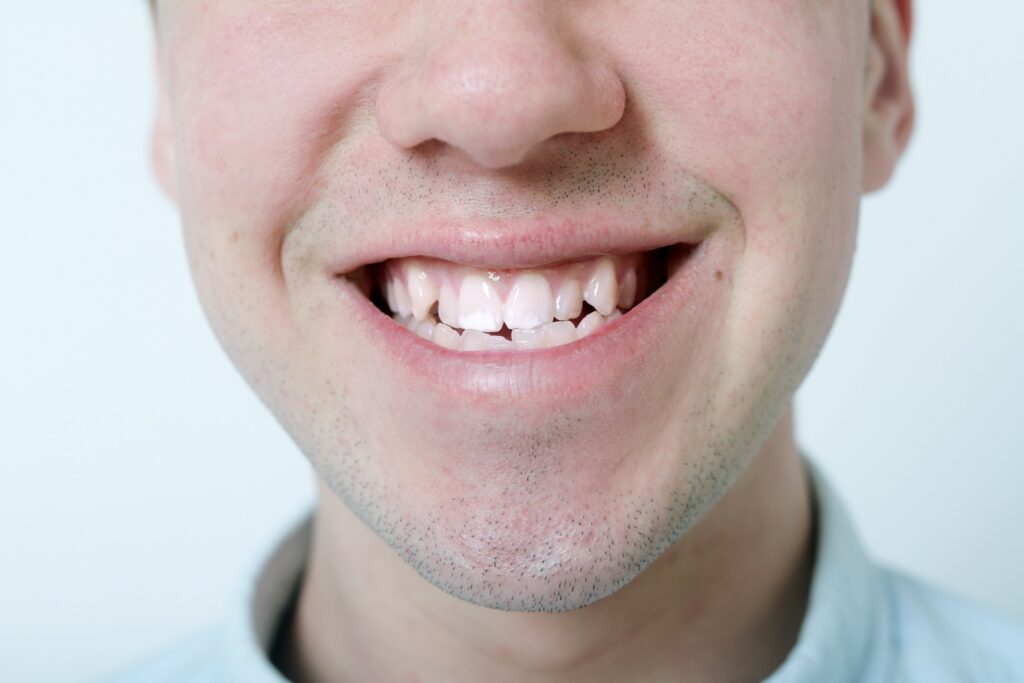
If your upper and lower teeth don’t line up properly when you bite down, you may have a crossbite or an underbite. Although these conditions can look similar, they affect the way your teeth and jaws fit together in different ways.
The main difference between a crossbite and an underbite is which teeth are affected and how they overlap. A crossbite occurs when one or more upper teeth sit inside the lower teeth instead of outside them. An underbite occurs when the lower front teeth extend in front of the upper front teeth when the mouth is closed.
Both conditions can affect how you bite, chew, and wear down your teeth. Fortunately, orthodontic treatment can correct many crossbites and underbites, especially when they’re identified early.
At Fry Orthodontics, we’ve helped Kansas City-area families improve their smiles and bite alignment since 1977. Understanding the differences between these conditions is a good first step toward finding the right treatment.
Crossbite vs. Underbite: What’s the Difference?
Crossbites and underbites are types of malocclusion, the dental term for teeth or jaws that don’t fit together properly.
While both involve bite misalignment, their appearance, causes, and treatment needs can differ.
| Feature | Crossbite | Underbite |
|---|---|---|
| Definition | One or more upper teeth fit inside the lower teeth | Lower front teeth sit ahead of upper front teeth |
| Location | Front teeth, back teeth, or both | Primarily the front bite relationship |
| Appearance | Certain teeth appear to overlap in the wrong direction | Lower teeth or jaw may appear more prominent |
| Common causes | Tooth position, narrow upper jaw, or jaw growth differences | Tooth position, jaw growth differences, or both |
| Possible effects | Uneven tooth wear, chewing difficulties, jaw shifting | Tooth wear, chewing difficulties, bite imbalance |
| Treatment options | Braces, clear aligners, expansion, or other appliances | Braces, clear aligners, growth-guidance appliances, or jaw surgery in selected cases |
| Best time for evaluation | Childhood, although adults can be treated | Childhood, although adults can be treated |
An important distinction: A crossbite can affect just one tooth, several teeth, or an entire section of the bite. An underbite describes the relationship between the upper and lower front teeth and may involve the underlying jaw structure.
An orthodontist can determine whether the problem comes primarily from tooth positioning, jaw development, or a combination of both.
What Is a Crossbite?
A crossbite occurs when one or more upper teeth bite inside the corresponding lower teeth rather than slightly outside them.
Normally, the upper teeth fit just outside the lower teeth when you close your mouth. With a crossbite, that relationship is reversed in part of the mouth.
Crossbites are generally classified into two categories.
Anterior Crossbite
An anterior crossbite affects the front teeth. One or more upper front teeth sit behind the lower front teeth when biting down.
This can sometimes resemble an underbite, but the two aren’t necessarily the same.
For example, a child might have one upper front tooth that erupted behind a lower tooth while the rest of the bite is properly aligned. That would be an anterior crossbite rather than a full underbite.
Posterior Crossbite
A posterior crossbite affects the back teeth, including premolars or molars.
It often occurs when the upper dental arch is narrower than the lower arch, causing some upper back teeth to bite inside the lower back teeth.
In certain cases, a child may shift the lower jaw to one side to bring the teeth together comfortably.
An orthodontist will evaluate whether the crossbite is caused by tooth positioning, the width of the upper jaw, or another underlying factor.
What Are the Signs of a Crossbite?
Some crossbites are easy to notice, while others may not be obvious without a dental examination.
Common signs include:
- One or more upper teeth sitting behind the lower teeth
- Upper back teeth biting inside the lower back teeth
- Uneven contact between the upper and lower teeth
- Shifting the jaw to one side when closing the mouth
- Difficulty biting or chewing certain foods
- Uneven tooth wear
- A smile that appears asymmetrical
Not everyone with a crossbite experiences discomfort. However, a bite that doesn’t fit together properly may place uneven forces on certain teeth.
What Causes a Crossbite?
Crossbites can develop for several reasons, including genetics, differences in jaw growth, tooth eruption patterns, or a narrow upper jaw.
Prolonged childhood habits, such as thumb sucking or pacifier use, may also contribute to certain bite-development problems.
Sometimes, the teeth themselves are positioned incorrectly even though the jaws are reasonably well aligned. In other cases, the underlying jaw relationship needs to be addressed.
Understanding the cause is important because treatment for a dental crossbite may differ from treatment for a skeletal crossbite.
What Is an Underbite?
An underbite occurs when the lower front teeth extend ahead of the upper front teeth when biting down.
In orthodontics, this may be described as an anterior crossbite or a Class III bite relationship, depending on the specific tooth and jaw positions. Not every underbite involves the same underlying problem.
Some underbites are relatively mild and primarily involve tooth positioning. Others result from differences in jaw growth, such as an upper jaw that hasn’t developed as far forward as expected, a more prominent lower jaw, or a combination of the two.
What Does an Underbite Look Like?
An underbite may cause the lower front teeth to appear more prominent than the upper front teeth.
In more pronounced cases, the lower jaw or chin may appear to project forward.
However, facial appearance alone isn’t enough to diagnose an underbite. Some patients have a noticeable jaw relationship without severe tooth misalignment, while others have an underbite that’s most apparent when their teeth come together.
What Are the Signs of an Underbite?
Common signs include:
- Lower front teeth extending ahead of the upper front teeth
- Difficulty biting into certain foods
- Uneven wear on the front teeth
- A lower jaw that appears more prominent
- Difficulty finding a comfortable bite
- Speech changes in some cases
- Jaw discomfort in some patients
An underbite doesn’t always cause pain or noticeable functional problems. Its impact depends on the severity of the misalignment and how the teeth contact one another.
What Causes an Underbite?
Genetics and jaw growth patterns are common contributors to underbites.
A person may inherit a relatively small upper jaw, a more prominent lower jaw, or a combination of jaw characteristics that affects how the teeth fit together.
Tooth positioning can also contribute. In some cases, the jaws are reasonably aligned, but the front teeth are angled or positioned in a way that creates an underbite.
Because these causes differ, an orthodontist needs to evaluate both tooth alignment and jaw relationships before recommending treatment.
Can a Crossbite or Underbite Cause Problems if Left Untreated?
Not every crossbite or underbite causes serious complications. However, certain bite problems can contribute to dental wear, chewing difficulties, or functional concerns over time.
Potential issues include:
Uneven tooth wear: When teeth meet at unusual angles, certain surfaces may experience excessive contact.
Difficulty chewing: Some patients find it harder to bite through food or chew comfortably.
Jaw shifting: Certain crossbites cause patients to move their lower jaw to one side when closing their teeth together.
Gum or tooth irritation: Improper contact between teeth can sometimes contribute to localized wear or gum problems.
Changes during growth: In children, some bite problems become more pronounced as the jaws and permanent teeth develop.
A crossbite or underbite doesn’t automatically mean someone will develop jaw pain or a temporomandibular joint disorder (TMD). The relationship between bite alignment and jaw disorders is complex.
The most useful approach is to have the bite evaluated and determine whether treatment is recommended for that individual.
How Are Crossbites and Underbites Treated?
Treatment depends on the patient’s age, the severity of the problem, and whether the misalignment involves the teeth, jaws, or both.
Some patients need relatively straightforward tooth movement. Others may benefit from specialized orthodontic appliances or coordinated treatment.
Traditional Metal Braces
Metal braces are commonly used to correct tooth alignment and many types of bite problems.
Brackets and wires allow orthodontists to move teeth into more appropriate positions and improve the way the upper and lower teeth fit together.
Braces may be recommended for certain crossbites, dental underbites, or more complex cases requiring precise tooth movement.
Additional appliances or elastics may be needed depending on the treatment plan.
Invisalign Clear Aligners
Invisalign may be appropriate for certain crossbites and underbites, particularly when the problem can be addressed through tooth movement.
Clear aligners gradually reposition teeth according to a customized orthodontic plan.
However, Invisalign isn’t suitable for every bite problem. Significant jaw discrepancies may require a different approach, additional appliances, or treatment beyond clear aligners alone.
An orthodontic evaluation can help determine whether Invisalign or braces would provide more predictable results.
Palatal Expanders
A palatal expander may be recommended for certain children with a narrow upper jaw and posterior crossbite.
The appliance is designed to widen the upper jaw or dental arch, depending on the patient’s growth stage and appliance used.
Expansion can be especially useful while the upper jaw is still developing.
Not every crossbite requires an expander, and treatment options for adults with a narrow upper jaw may differ from those used for growing children.
Growth-Guidance Appliances
For some growing children with an underbite, an orthodontist may recommend appliances intended to influence the developing jaw relationship.
These may include facemask therapy or other growth-modification approaches in appropriately selected cases.
The timing of treatment matters because these approaches generally depend on remaining facial growth.
Growth-guidance treatment doesn’t guarantee that future treatment or surgery can be avoided.
Orthognathic Jaw Surgery
Some severe skeletal underbites, particularly in adults whose jaw growth is complete, cannot be fully corrected through tooth movement alone.
In these cases, orthodontic treatment may be combined with orthognathic surgery to reposition the jaws.
Surgery isn’t necessary for most routine alignment concerns. When a significant skeletal discrepancy is present, an orthodontist can explain whether evaluation by an oral and maxillofacial surgeon is appropriate.
Can a Crossbite or Underbite Be Corrected Without Surgery?
Yes, many crossbites and some underbites can be corrected without jaw surgery. Braces, clear aligners, expansion appliances, and other orthodontic treatments may be effective depending on the cause and severity.
A dental crossbite involving one or several teeth may be corrected through orthodontic tooth movement.
Certain underbites can also be improved without surgery, especially when the issue primarily involves tooth positioning or when growth-guidance treatment is appropriate.
However, severe skeletal underbites in adults may require surgery for complete correction of the jaw relationship.
The important distinction is whether treatment needs to move teeth, address jaw development, or both.
When Should Children Be Evaluated for a Crossbite or Underbite?
The American Association of Orthodontists recommends that children receive their first orthodontic evaluation no later than age seven.
At this age, an orthodontist can evaluate how the permanent teeth are developing and whether the upper and lower jaws are growing in a balanced way.
This doesn’t mean every seven-year-old needs braces.
In fact, many children simply need periodic monitoring until more permanent teeth have erupted.
However, certain crossbites and underbites may benefit from earlier attention, particularly when jaw growth or functional shifting is involved.
Fry Orthodontics offers orthodontic evaluations for children to help parents understand whether treatment is needed now or whether monitoring is the better approach.
Can a Crossbite or Underbite Get Worse as a Child Grows?
Some bite problems remain relatively stable, while others change as the teeth erupt and jaws develop.
A crossbite associated with a narrow upper jaw or a functional jaw shift may persist without correction. An underbite involving jaw growth differences may become more noticeable during adolescence.
Because growth patterns vary, an orthodontist can help parents understand what to watch for and whether early treatment offers an advantage.
Can Adults Fix a Crossbite or Underbite?
Yes. Adults can receive orthodontic treatment for many crossbites and underbites.
Although jaw growth is generally complete, teeth can still be repositioned with braces or clear aligners when the teeth and supporting tissues are healthy enough for treatment.
For adults with a dental crossbite or a relatively mild underbite, orthodontic treatment alone may be sufficient.
More pronounced skeletal problems may require additional treatment or surgical consultation.
Adults considering orthodontic care should also have their gum health, existing restorations, and overall dental condition evaluated.
Fry provides adult orthodontic treatment for patients interested in improving their smile and bite alignment.
How Long Does Treatment Take for a Crossbite or Underbite?
Treatment time varies considerably based on the problem being corrected.
A crossbite involving a single tooth may require less extensive treatment than a case involving several teeth and a significant jaw discrepancy.
Underbite treatment can also vary depending on whether the correction involves tooth movement, growth modification, or jaw surgery.
Factors affecting treatment time include:
- The severity of the bite problem
- The number of teeth involved
- Whether jaw growth needs to be addressed
- The type of orthodontic appliance used
- The patient’s age and stage of dental development
- How consistently treatment instructions are followed
During a consultation, an orthodontist can explain the recommended treatment and provide an individualized estimate of how long it may take.
How Much Does Crossbite or Underbite Treatment Cost?
The cost depends on the type and complexity of treatment.
A relatively straightforward orthodontic correction may have a different cost than treatment involving multiple appliances, longer treatment time, or coordinated surgical care.
Other factors include dental insurance benefits and the payment arrangements available.
At Fry Orthodontics, patients can discuss treatment costs, insurance benefits, and affordable payment options during their free initial exam.
The goal is to understand the recommended treatment and expected financial commitment before deciding how to proceed.
Crossbite and Underbite Treatment in Kansas City
Families throughout the Kansas City metro can receive orthodontic evaluations for crossbites, underbites, and other bite-alignment concerns at Fry Orthodontics.
With 14 orthodontic offices across Kansas and Missouri, Fry serves patients in communities including Overland Park, Olathe, Lee’s Summit, Lawrence, and surrounding areas.
Our orthodontic specialists evaluate more than the appearance of your smile. They examine how the upper and lower teeth fit together, whether jaw development may be contributing to the problem, and which treatment options may provide a healthy, stable result.
Whether you’re concerned about your child’s developing bite or an alignment problem you’ve had for years, a professional evaluation can help you understand your options.
Frequently Asked Questions About Crossbites and Underbites
Is a crossbite the same as an underbite?
No. A crossbite occurs when one or more upper teeth fit inside the lower teeth instead of outside them. An underbite occurs when the lower front teeth extend ahead of the upper front teeth. An anterior crossbite can sometimes resemble an underbite, but the underlying causes may differ.
Which is more serious, a crossbite or an underbite?
Neither is automatically more serious. Severity depends on the teeth involved, the underlying jaw relationship, and whether the condition affects chewing, tooth wear, or development. Some crossbites require early treatment, while certain skeletal underbites may need more extensive correction.
Can Invisalign fix a crossbite or underbite?
Invisalign can correct certain crossbites and underbites, particularly when the problem involves tooth positioning. More complex bite problems or significant jaw discrepancies may require braces, additional orthodontic appliances, or other treatment. An orthodontist can determine whether clear aligners are appropriate.
Can a child outgrow a crossbite or underbite?
Some bite relationships change as children grow, but parents shouldn’t assume a crossbite or underbite will correct itself. Certain problems can persist or become more pronounced during development. An orthodontic evaluation by age seven can help determine whether treatment or monitoring is appropriate.
Can an underbite be corrected without surgery?
Yes, some underbites can be corrected without surgery using braces, clear aligners, or growth-guidance appliances in children. However, severe skeletal underbites in adults may require orthognathic surgery for complete correction. Treatment depends on the cause and severity of the condition.
Concerned About a Crossbite or Underbite? Start With a Free Exam.
A crossbite or underbite doesn’t always require immediate treatment, but understanding what’s causing the problem is important.
At Fry Orthodontics, we help children, teens, and adults throughout Kansas City understand their bite alignment and available treatment options.
During your free initial exam, our team will evaluate your teeth and bite, explain whether treatment is recommended, and discuss potential options, timing, and costs.
Schedule your free orthodontic exam and take the first step toward a healthier, more comfortable bite.