
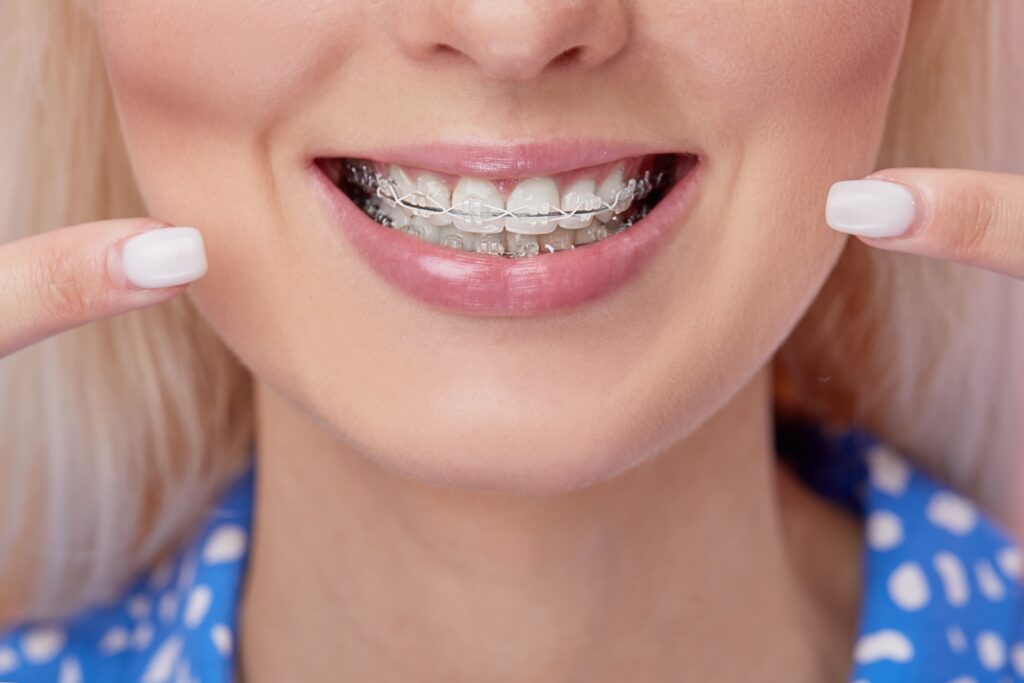
One of the biggest reasons people choose ceramic braces is their appearance. The tooth-colored brackets blend in with your smile, making them less noticeable than traditional metal braces. But if you’re thinking about clear braces, you might be wondering: Will they stay clear throughout treatment?
Ceramic braces are generally stain-resistant, but some of the components around them can become discolored. The ceramic brackets themselves typically maintain their color. However, clear or light-colored elastic ties, when used, can absorb pigments from certain foods and drinks.
The good news is that a few simple habits can help keep your braces looking clean throughout treatment.
At Fry Orthodontics, we offer clear ceramic braces for teens and adults throughout the Kansas City area who want a less noticeable way to straighten their teeth.
Do Ceramic Braces Turn Yellow Over Time?
Ceramic brackets are designed to resist discoloration, so they generally don’t turn yellow the way some patients expect.
What often changes color is the small elastic material used with certain types of braces.
These elastic ties, also called ligatures, help hold the orthodontic wire in place. Because they’re made from a different material than ceramic brackets, they may become discolored between appointments.
For example, after several weeks of drinking coffee or eating heavily pigmented foods, clear elastic ties may develop a yellowish or darker appearance.
This doesn’t necessarily mean the braces are damaged or that the brackets themselves have permanently changed color.
It’s also worth noting that not all ceramic braces use elastic ties. Some systems use self-ligating brackets, which secure the wire with a built-in mechanism.
Fry Orthodontics offers self-ligating clear braces in certain treatment settings, which can reduce concerns about discolored elastic ties.
What Causes Clear Braces to Look Stained?
Several everyday habits can affect the appearance of ceramic braces and the materials surrounding them.
1. Coffee and Tea
Coffee and tea contain pigments that can discolor certain orthodontic elastics.
Frequent exposure may make clear ties look darker or yellow over time, particularly if you sip these drinks throughout the day.
You don’t necessarily have to eliminate coffee or tea during treatment. However, drinking water afterward and maintaining good oral hygiene can help limit staining and plaque buildup.
2. Curry and Other Strongly Pigmented Foods
Turmeric, commonly found in curry, is a particularly strong pigment.
Tomato-based sauces, certain spices, and deeply colored foods may also discolor clear elastic ties.
The ceramic brackets themselves are more resistant to these pigments, but surrounding materials may not be.
3. Red Wine and Dark Beverages
Red wine, dark sodas, and other highly pigmented beverages may contribute to discoloration.
Acidic and sugary drinks also present a separate concern: they can increase the risk of enamel damage or cavities when teeth aren’t cleaned properly around braces.
4. Plaque and Food Buildup
Sometimes braces look yellow or dull because plaque has accumulated around the brackets.
Plaque is a sticky bacterial film that can collect in areas that are difficult to brush.
If it isn’t removed regularly, it may contribute to gum inflammation, tooth decay, and visible discoloration around the braces.
5. Tobacco Use
Smoking and other tobacco use can stain teeth and orthodontic materials.
Tobacco also increases the risk of gum disease and other oral health problems, making it particularly concerning during orthodontic treatment.
Ceramic Brackets vs. Elastic Ties: What Actually Stains?
Understanding which parts of your braces may discolor can help you care for them properly.
| Component | Staining potential | What to know |
|---|---|---|
| Ceramic brackets | Low | Designed to resist staining and maintain their appearance |
| Clear elastic ties | Higher | May discolor from coffee, tea, curry, and other pigments |
| Orthodontic wires | Generally low | May collect plaque or surface deposits |
| Tooth enamel | Can discolor | Plaque, diet, and inadequate cleaning can affect appearance |
| Adhesive around brackets | Varies | Exposed adhesive may occasionally discolor over time |
If your braces appear stained, your orthodontic team can help identify whether the discoloration involves the ties, brackets, adhesive, or your teeth.
How to Keep Ceramic Braces Clean and Clear
You don’t need an elaborate cleaning routine to care for ceramic braces. Consistency matters more than expensive products or complicated techniques.
Brush Carefully After Meals
Brush your teeth at least twice daily with fluoride toothpaste, and clean around your braces after meals whenever practical.
Angle your toothbrush above and below the brackets to reach areas where food and plaque tend to collect.
An electric toothbrush or soft-bristled manual toothbrush can work well when used thoroughly.
Pay particular attention to the gumline and the edges of each bracket.
Floss Every Day
Flossing with braces takes a little more effort, but it’s important for removing plaque between teeth.
Floss threaders, orthodontic flossers, or other recommended cleaning aids can make the process easier.
A water flosser may also help remove food debris around brackets and wires, although it shouldn’t automatically replace thorough interdental cleaning.
Rinse With Water After Staining Foods or Drinks
If you drink coffee or eat foods containing strong pigments, rinse your mouth with water afterward.
This can help wash away some residual food particles and pigments.
Water is also a better everyday beverage choice than sugary or acidic drinks.
Use an Interdental Brush
Small interdental brushes can help clean around brackets and underneath wires.
They’re particularly useful for removing food particles from areas that a regular toothbrush may miss.
Ask your orthodontic team which size and type are appropriate for your braces.
Keep Your Orthodontic Appointments
Regular visits allow your orthodontist to monitor tooth movement, inspect your appliances, and address any concerns about discoloration or cleaning.
If your braces use elastic ties, your orthodontic team can explain when those ties are normally replaced.
Never attempt to remove or replace orthodontic components yourself.
Can You Whiten Your Teeth While Wearing Ceramic Braces?
It’s generally best to discuss whitening treatments with your orthodontist before using them during braces treatment.
Whitening products may not reach the tooth surfaces covered by brackets, potentially resulting in uneven coloration once the braces are removed.
Whitening products also won’t necessarily remove stains from elastic ties or orthodontic adhesive.
If you’re concerned about tooth color, your orthodontist or general dentist can recommend appropriate cleaning and whitening options.
Many patients prefer to wait until their braces are removed before considering cosmetic whitening.
Do Self-Ligating Ceramic Braces Stain Less?
Self-ligating ceramic braces can offer an appearance advantage because they don’t rely on traditional elastic ties to secure the archwire at every bracket.
Since elastic ties are often the component most likely to discolor, eliminating them may help reduce visible staining.
However, self-ligating braces still require careful brushing and flossing. Plaque can accumulate around any orthodontic appliance, regardless of bracket design.
The best choice depends on your treatment needs and the specific appliances recommended by your orthodontist.
Are Ceramic Braces Harder to Clean Than Metal Braces?
Ceramic braces and traditional metal braces require similar daily cleaning routines.
Both have brackets and wires that create additional surfaces where plaque and food particles can collect.
The main difference is that discoloration may be more noticeable on clear or tooth-colored components.
With either option, proper brushing, daily flossing, and regular dental cleanings are essential.
Ceramic braces aren’t necessarily harder to clean, but patients who choose them for their appearance may pay closer attention to staining.
Are Ceramic Braces a Good Option for Adults and Teens?
Ceramic braces are particularly appealing to patients who want fixed orthodontic treatment without the more noticeable appearance of metal brackets.
For adults considering orthodontic treatment, they offer a way to straighten teeth while maintaining a relatively discreet appearance at work and in social settings.
Teenagers may also appreciate having a less noticeable option for school, photographs, and everyday activities.
Unlike removable Invisalign aligners, ceramic braces stay attached to the teeth throughout treatment. That means patients don’t have to remember to wear aligners for a prescribed number of hours each day.
The tradeoff is that fixed braces require more attention when eating, brushing, and flossing.
Your orthodontist can help determine which option best fits your alignment needs and lifestyle.
Clear Ceramic Braces in Kansas City
Fry Orthodontics offers ceramic braces for patients throughout the Kansas City metro, including communities such as Overland Park, Lee’s Summit, and surrounding areas in Kansas and Missouri.
Since 1977, Fry has helped local families explore orthodontic treatment options that fit their needs, preferences, and budgets.
During a free initial exam, our orthodontists can explain how ceramic braces work, whether they’re appropriate for your smile, and what to expect when caring for them.
Frequently Asked Questions About Ceramic Braces Staining
Do clear ceramic braces stain easily?
Ceramic brackets are generally resistant to staining. However, clear or light-colored elastic ties used with some braces may discolor after exposure to coffee, tea, curry, and other pigmented foods or drinks.
Can coffee turn ceramic braces yellow?
Coffee may discolor clear elastic ties, but the ceramic brackets themselves are typically stain-resistant. Rinsing with water after drinking coffee and maintaining good oral hygiene can help reduce visible discoloration.
Can you remove stains from clear braces?
It depends on what’s stained. Plaque and some surface deposits may improve with proper cleaning, but discolored elastic ties may need to be replaced by your orthodontic team. Avoid attempting to bleach or alter braces yourself.
Do self-ligating ceramic braces stain less?
Self-ligating ceramic braces may have fewer staining concerns because they don’t require traditional elastic ties on every bracket. However, the teeth and appliances still need thorough daily cleaning.
Will ceramic braces stay clear throughout treatment?
The ceramic brackets generally maintain their tooth-colored appearance throughout treatment. Some surrounding materials may discolor, but regular cleaning and orthodontic visits can help keep braces looking their best.
Keep Your Smile Looking Great With Fry Orthodontics
Choosing ceramic braces means you can enjoy the benefits of fixed orthodontic treatment with a less noticeable appearance.
And while some components can discolor, caring for clear braces doesn’t have to be difficult.
With good brushing and flossing habits, sensible food choices, and regular orthodontic appointments, you can help your braces stay clean throughout treatment.
Interested in learning whether ceramic braces are right for you?
Schedule a free orthodontic exam with Fry Orthodontics to explore your options.