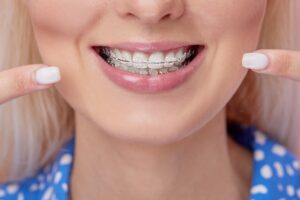
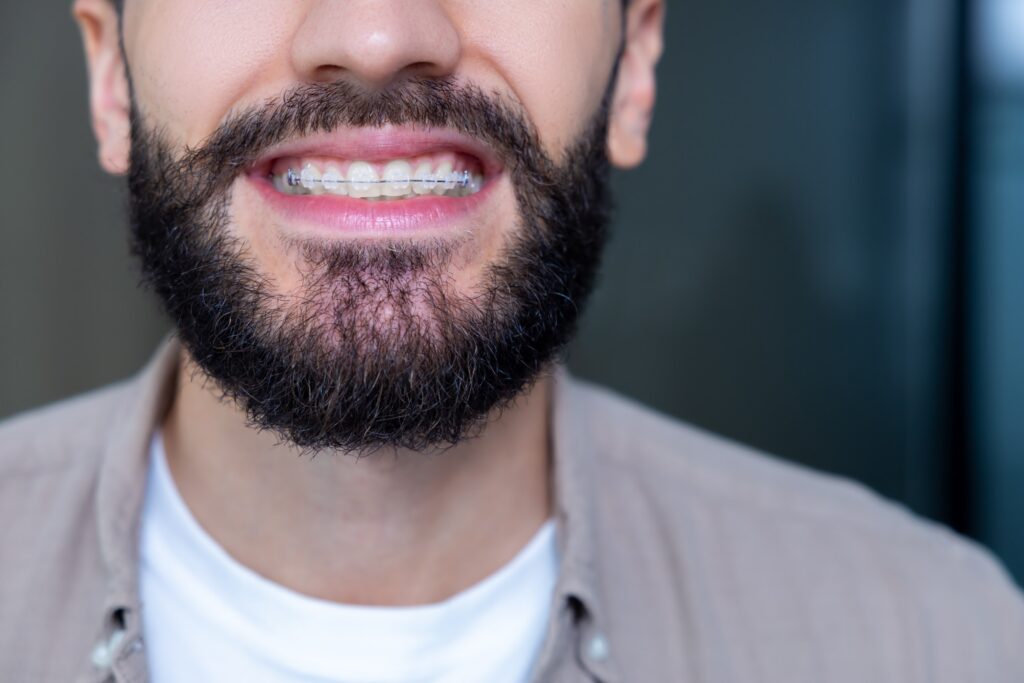
If you’re comparing ceramic braces with traditional metal braces, treatment time is probably one of your biggest questions. Ceramic braces are less noticeable, but does choosing a more discreet option mean spending more time in orthodontic treatment?
Ceramic braces don’t necessarily take longer than metal braces. Both use brackets and wires to gradually move teeth into better alignment, and treatment times are often comparable. The biggest factors are usually the complexity of your orthodontic needs, the movements required, and how your teeth respond to treatment.
There are situations where metal braces may offer advantages, particularly for certain complex tooth movements. But choosing ceramic braces doesn’t automatically mean adding months to your treatment.
At Fry Orthodontics, we help children, teens, and adults throughout the Kansas City area compare their options and choose treatment based on their individual needs.
How Long Do Ceramic Braces Take?
Ceramic braces treatment commonly takes approximately 12 to 24 months, although some patients finish sooner and others require longer treatment.
This is a broad planning range, not a prediction for every patient.
Someone with relatively mild crowding may have a shorter treatment plan than a patient who needs significant bite correction, space closure, or complex tooth movement.
Fry Orthodontics reports an average braces treatment time of approximately 18 months, but your actual timeline depends on your orthodontic evaluation.
The important thing to remember is that treatment time is determined by what your teeth and bite need—not simply whether the brackets are ceramic or metal.
Ceramic Braces vs. Metal Braces: Treatment Time Comparison
Both ceramic and metal braces are fixed orthodontic appliances. They use brackets attached to the teeth and archwires that apply controlled forces to guide tooth movement.
Here’s how they compare:
| Feature | Ceramic Braces | Metal Braces |
|---|---|---|
| Typical treatment duration | Often comparable to metal braces | Often comparable to ceramic braces |
| Appearance | Clear or tooth-colored brackets | Visible metal brackets |
| Tooth movement | Effective for many alignment and bite concerns | Effective for a wide range of cases, including complex movements |
| Durability | Strong, but ceramic brackets can be more brittle | Generally more resistant to bracket fracture |
| Removable | No | No |
| Daily responsibility | Brushing, flossing, and avoiding damaging foods | Brushing, flossing, and avoiding damaging foods |
| Best fit | Patients wanting less noticeable fixed braces | Patients prioritizing durability or specific treatment mechanics |
Bottom line: For many patients, ceramic and metal braces can achieve similar results in similar amounts of time.
Your orthodontist may recommend one over the other based on the specific tooth movements needed.
Why Do Some People Think Ceramic Braces Take Longer?
The idea that ceramic braces are always slower comes partly from differences between ceramic and metal bracket materials.
Traditional ceramic brackets can behave differently from metal brackets when interacting with orthodontic wires. Certain designs may create more friction or require adjustments to the treatment mechanics.
However, modern ceramic bracket systems have improved considerably.
The type of bracket, wire, and orthodontic technique all influence how treatment progresses.
Bracket Materials and Friction
Metal and ceramic brackets have different physical properties.
In some circumstances, ceramic brackets can create greater friction against an orthodontic wire, potentially affecting certain types of tooth movement.
But friction alone doesn’t determine overall treatment speed.
Orthodontists select wires, brackets, and treatment mechanics based on the movements required, and modern bracket designs can help address some of these differences.
Durability and Broken Brackets
Ceramic brackets are strong enough for routine orthodontic treatment, but they can be more brittle than metal brackets.
If a bracket breaks or becomes detached, it may need to be repaired or replaced.
Repeated appliance damage can interrupt treatment progress, regardless of which type of braces you wear.
That’s one reason following food restrictions and appliance-care instructions matters.
Complex Tooth Movements
Some orthodontic cases require more complicated movements than others.
For example, significant rotations, severe crowding, or complex bite problems may require particular treatment techniques.
Metal braces may be preferred for certain situations because of their durability and the mechanical options they provide.
That doesn’t mean ceramic braces can’t treat complex problems. It means your orthodontist needs to select the most appropriate appliance for your specific case.
What Actually Determines How Long You’ll Wear Braces?
Several factors influence orthodontic treatment time more than the color or appearance of your brackets.
1. Severity of Crowding or Spacing
Mild crowding or small gaps may require less extensive correction than severe overlapping or significant spacing.
The amount and direction of tooth movement affect the treatment plan.
2. Bite Alignment
Orthodontic treatment often involves more than straightening the visible front teeth.
An overbite, underbite, crossbite, or open bite may require additional adjustments to improve how the upper and lower teeth fit together.
These corrections can influence treatment length.
3. Age and Individual Biology
Children, teenagers, and adults can all benefit from orthodontic treatment.
However, growth patterns, bone remodeling, and the health of the supporting tissues can affect how treatment is planned.
Adults can achieve excellent results with braces, although certain jaw-related problems may require different approaches once growth is complete.
Learn more about adult orthodontic treatment at Fry Orthodontics.
4. Broken Brackets and Missed Appointments
Orthodontic appliances work best when they’re maintained properly.
Broken brackets, damaged wires, and missed appointments can interfere with the planned sequence of treatment.
Keeping your scheduled visits helps your orthodontic team monitor progress and make necessary adjustments.
5. Following Treatment Instructions
Some patients need elastics or other appliances to help correct their bite.
If your orthodontist prescribes elastics, wearing them as directed is important.
Inconsistent use may slow progress, even when the braces themselves are working properly.
Are Ceramic Braces as Effective as Metal Braces?
Yes. Ceramic braces can be an effective treatment for many of the same alignment problems addressed with metal braces.
They use the same general principle: brackets and wires apply controlled forces that gradually reposition teeth.
Both options may be used to address:
- Crowded or overlapping teeth
- Gaps between teeth
- Certain overbites and underbites
- Crossbites
- Rotated teeth
- Other alignment and bite concerns
The suitability of ceramic braces depends on the details of the case.
Fry Orthodontics offers both ceramic braces and metal braces, allowing patients to discuss which option best matches their treatment needs and appearance preferences.
Can You Get Ceramic Braces on Just Your Top Teeth?
In some cases, an orthodontist may recommend ceramic brackets on the upper teeth and metal brackets on the lower teeth.
This approach can make the braces less noticeable when smiling while allowing different bracket materials to be used where appropriate.
However, the choice depends on your bite, the amount of space between your teeth, and the treatment mechanics required.
Ceramic brackets on lower teeth can present additional considerations in certain bite relationships because of their hardness and potential contact with opposing teeth.
Your orthodontist can explain whether a combination of ceramic and metal brackets is appropriate for you.
Can You Speed Up Ceramic Braces Treatment?
There isn’t a safe shortcut that guarantees faster orthodontic treatment.
Teeth need time to move through the surrounding bone, and applying excessive force isn’t a reliable way to achieve healthier or faster results.
However, you can help prevent avoidable delays.
Protect Your Brackets
Avoid hard, sticky, or crunchy foods that could damage your braces.
Follow the food recommendations provided by your orthodontic team.
Keep Your Teeth and Gums Healthy
Brush carefully around brackets and wires, floss daily, and continue seeing your general dentist for routine care.
Poor oral hygiene can lead to problems that complicate orthodontic treatment.
Attend Scheduled Appointments
Progress visits allow your orthodontist to monitor tooth movement and make adjustments when needed.
If you experience a broken bracket or another appliance problem, contact the office for guidance.
Wear Elastics as Directed
If elastics are part of your treatment plan, follow the prescribed schedule.
Wearing them inconsistently may delay certain bite corrections.
Ceramic Braces vs. Invisalign: Which Is Faster?
Patients who want less noticeable orthodontic treatment often compare ceramic braces with Invisalign clear aligners.
Neither option is automatically faster.
Ceramic braces remain attached to the teeth, so they provide continuous treatment without requiring patients to remember to wear removable appliances.
Invisalign aligners are removable and generally need to be worn for most of the day, according to your orthodontist’s instructions.
Treatment time depends on the tooth movements required and how consistently patients follow the treatment plan.
For some patients, Invisalign may be an excellent option. Others may benefit from the control of fixed braces.
The right choice should be based on treatment predictability, lifestyle, and personal preferences rather than an assumption that one appliance is always faster.
Are Ceramic Braces Worth Choosing Over Metal Braces?
For many patients, the biggest advantage of ceramic braces is appearance.
The brackets blend more naturally with the teeth, making them less noticeable during conversations, photographs, and everyday activities.
That can be particularly appealing to adults who work in public-facing roles or teenagers who feel self-conscious about visible braces.
Metal braces, on the other hand, are generally durable and may be recommended for certain treatment needs.
The best choice comes down to what matters most to you and which appliance your orthodontist believes will work well for your smile.
When Ceramic Braces May Be a Good Choice
Ceramic braces may appeal to patients who:
- Want a less noticeable alternative to metal braces
- Prefer fixed treatment rather than removable aligners
- Have orthodontic needs that can be effectively treated with ceramic brackets
- Are comfortable following braces-related food and cleaning instructions
- Understand that ceramic brackets may require extra care to avoid damage
When Metal Braces May Be Recommended
Metal braces may be preferable for patients who:
- Need certain complex tooth movements
- Want a particularly durable bracket option
- Are less concerned about the appearance of braces
- Participate in activities where appliance durability is an important consideration
- Prefer an option that may have a lower cost, depending on the treatment plan
Neither option is universally better. An orthodontic evaluation can help you compare the benefits and limitations.
Does the Cost of Ceramic Braces Affect Treatment Time?
The cost of ceramic braces is separate from how quickly your teeth move.
Ceramic braces may cost more than traditional metal braces because of the materials and appliances involved, but a higher price doesn’t necessarily mean faster or slower treatment.
The overall cost also depends on case complexity, treatment duration, and other factors.
At Fry Orthodontics, patients can review their estimated treatment costs, insurance benefits, and available payment options during a free initial exam.
Ceramic and Metal Braces in Kansas City
Fry Orthodontics helps patients throughout the Kansas City area compare ceramic braces, metal braces, and Invisalign based on their treatment goals.
With offices across Kansas and Missouri, including Overland Park, Olathe, and Lee’s Summit, patients can explore orthodontic options close to home.
Since 1977, Fry has provided orthodontic care for children, teens, and adults.
During your free initial exam, an orthodontist can evaluate your teeth and bite, discuss whether ceramic or metal braces are appropriate, and provide a personalized treatment-time estimate.
Frequently Asked Questions About Ceramic Braces Treatment Time
Do ceramic braces take longer than metal braces?
Not necessarily. Ceramic and metal braces often have comparable treatment times. The length of treatment depends primarily on the complexity of the case, the tooth movements required, and how well patients follow their orthodontist’s instructions.
How long do ceramic braces usually take?
Ceramic braces treatment often takes approximately 12 to 24 months, although individual timelines vary. Mild alignment problems may require less time, while more complex bite corrections can take longer.
Are ceramic braces less effective than metal braces?
No. Ceramic braces can effectively treat many of the same alignment and bite concerns as metal braces. However, metal brackets may be preferred for certain complex movements or situations where greater bracket durability is important.
Can ceramic braces straighten teeth in six months?
Some limited orthodontic corrections may be completed in approximately six months, but this isn’t typical for every patient. More extensive tooth movement and bite correction usually require longer treatment. An orthodontist can provide a realistic estimate after evaluating your teeth.
Do ceramic braces break more easily than metal braces?
Ceramic brackets can be more brittle than metal brackets, making them more susceptible to certain types of damage. Following food restrictions and appliance-care instructions can help reduce the risk of broken brackets and treatment interruptions.
Find Out How Long Your Braces Treatment May Take
If you’re considering ceramic braces, you shouldn’t have to guess whether they’ll take longer than metal braces.
The best way to understand your treatment timeline is through an orthodontic evaluation.
At Fry Orthodontics, we’ll examine your teeth and bite, explain your treatment options, and provide an individualized estimate of how long treatment may take.
Whether you prefer ceramic braces, traditional metal braces, or Invisalign, our goal is to help you choose an option that fits your needs and lifestyle.
Schedule your free orthodontic exam and learn which treatment may be right for your smile.