
If you’re thinking about straightening your teeth, one of the first decisions you’ll face is whether to choose Invisalign or traditional braces. Both can improve your smile and correct a variety of orthodontic problems, but they work differently and come with different day-to-day responsibilities.
So, is Invisalign better than braces? Neither treatment is automatically better. Invisalign offers clear, removable aligners, while braces use brackets and wires that stay attached to your teeth. Both can produce excellent results when used for the right orthodontic needs.
At Fry Orthodontics, we’ve helped Kansas City-area patients navigate that decision since 1977. Here’s what you should know about cost, effectiveness, treatment time, comfort, and lifestyle before choosing.
Invisalign vs. Braces: What’s the Difference?
The biggest difference between Invisalign and braces is how they move your teeth.
Invisalign treatment uses a series of custom-made, removable clear aligners. Each set gradually moves your teeth according to a treatment plan developed by your orthodontist.
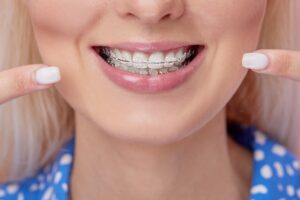
Traditional metal braces use brackets attached to your teeth and connected by orthodontic wires. These appliances apply controlled forces to move teeth into better positions over time.
Both approaches can correct crooked teeth, spacing, crowding, and certain bite problems. The best choice depends on the movements needed, the complexity of your case, and how consistently you can follow treatment instructions.
Invisalign vs. Braces at a Glance
| Feature | Invisalign | Traditional Braces |
|---|---|---|
| Appearance | Clear, less noticeable aligners | Visible brackets and wires |
| Removable | Yes | No |
| Eating | Remove aligners before eating | Avoid certain hard, sticky, and chewy foods |
| Cleaning | Remove aligners to brush and floss | Clean around brackets and wires |
| Treatment effectiveness | Effective for many alignment and bite problems | Effective for a broad range of simple and complex cases |
| Patient responsibility | Requires consistent daily wear | Works continuously while attached |
| Comfort | No brackets or wires, but pressure and irritation are possible | Temporary soreness and bracket irritation are possible |
| Treatment time | Depends on individual needs and aligner wear | Depends on individual needs and adjustments |
| Cost | Depends on treatment complexity and plan | Depends on treatment complexity and plan |
The bottom line: Invisalign is often appealing to patients who want a discreet, removable option. Braces may be preferable when fixed appliances offer better control or when remembering to wear aligners could be difficult.
Is Invisalign More Expensive Than Braces?
Not necessarily. Invisalign and traditional braces can have comparable costs, especially when treating similar orthodontic problems.
The total price of either treatment depends on several factors:
- How much tooth movement is needed
- Whether bite correction is required
- The complexity and anticipated length of treatment
- The type of orthodontic appliance selected
- Available dental insurance benefits
- Payment arrangements
A relatively straightforward Invisalign case may cost less than a complex braces case, while more extensive clear-aligner treatment may cost more than simpler braces treatment.
At Fry Orthodontics, patients receive a personalized treatment estimate during their free initial exam. Our team also reviews insurance benefits and available orthodontic financing and payment options.
Does Insurance Cover Invisalign and Braces Differently?
Some dental insurance plans provide orthodontic benefits that may apply to both braces and Invisalign. Others have age restrictions, lifetime maximums, or specific coverage requirements.
The important number isn’t just the treatment fee. It’s your estimated out-of-pocket cost after any applicable insurance benefits.
Fry’s treatment coordinators can help patients understand their benefits before treatment begins.
Which Works Faster: Invisalign or Braces?
Neither Invisalign nor braces is consistently faster for every patient. Treatment time depends on the type and severity of the orthodontic problem, the movements required, and how treatment progresses.
Some straightforward alignment problems can be treated relatively quickly with clear aligners. More complex cases may require longer treatment regardless of which appliance is used.
For Invisalign, treatment time also depends heavily on wearing the aligners as instructed. Leaving them out too often can slow progress or require changes to the treatment plan.
With braces, the appliances remain attached and continue working without patients needing to remember to put them back in.
What Affects Orthodontic Treatment Time?
Several factors influence how long treatment takes:
- The amount of crowding or spacing
- The severity of bite misalignment
- Whether teeth need to rotate or move vertically
- How teeth respond to orthodontic forces
- Consistency with aligner wear, rubber bands, and other instructions
- Oral health and attendance at scheduled appointments
Your orthodontist can provide a more meaningful timeline after examining your teeth and bite.
Do Invisalign and Braces Produce the Same Results?
In many cases, Invisalign and braces can achieve comparable improvements in tooth alignment and bite function. However, they aren’t interchangeable for every patient.
Modern clear-aligner treatment can address more than minor cosmetic concerns. Invisalign may be appropriate for certain cases involving crowding, spacing, overbites, underbites, and crossbites.
Braces remain particularly useful for some complex movements because the orthodontist can apply continuous, controlled forces through brackets, wires, and other appliances.
The outcome depends on proper diagnosis, treatment planning, the orthodontic problem, and patient cooperation—not simply which appliance looks better.
Can Invisalign Fix Severe Crowding or Bite Problems?
Sometimes. Invisalign can treat certain complex cases, often with attachments, elastics, or additional treatment techniques. Other cases may be better managed with braces or a combination of approaches.
If you have significant crowding, an overbite, an underbite, or a crossbite, the most useful next step is an orthodontic evaluation rather than assuming one treatment cannot work.
Invisalign vs. Braces: Which Is More Comfortable?
Both treatments can cause temporary discomfort as teeth move.
Invisalign aligners are smooth and don’t have traditional brackets or wires, which may reduce certain types of cheek and lip irritation. However, patients can still experience pressure, soreness, or irritation, particularly when changing to a new set of aligners.
Braces may cause tenderness after placement or adjustments. Brackets and wires can also irritate the inside of the mouth, especially early in treatment.
Most patients gradually adjust to either appliance.
Which Is Easier to Keep Clean?
Invisalign generally makes brushing and flossing more straightforward because you remove the aligners before cleaning your teeth.
With braces, patients must carefully clean around brackets and beneath wires. Floss threaders, interdental brushes, or other recommended tools can help.
However, Invisalign also requires good habits. Teeth should be cleaned before aligners are reinserted, and the aligners themselves need regular cleaning.
Neither treatment eliminates the need for excellent oral hygiene and routine dental visits.
Eating With Invisalign vs. Braces
Food restrictions are one of the most noticeable lifestyle differences between these treatments.
Eating With Invisalign
Invisalign aligners are removed for meals and snacks. That means patients can generally continue enjoying their usual foods without worrying about damaging attached brackets.
However, aligners need to be worn for the prescribed number of hours each day. Frequent snacking or leaving them out for extended meals can interfere with treatment.
Eating With Braces
Braces remain attached while eating, so patients need to avoid foods that could damage brackets or wires.
Common examples include hard candies, sticky caramels, chewing ice, and biting directly into particularly hard foods.
Many everyday foods are still perfectly manageable with braces. Some simply need to be cut into smaller pieces.
For patients who prefer fewer food restrictions, Invisalign may be especially appealing. For patients who don’t want to manage removable appliances throughout the day, braces may be easier.
Invisalign vs. Braces for Teens
Both Invisalign and braces can be effective for teenagers, but responsibility and daily habits are important considerations.
Invisalign can be attractive to teens who prefer a less noticeable treatment option. Removable aligners also make brushing, flossing, and eating more convenient.
The tradeoff is that teens must wear the aligners consistently, keep track of them during meals, and follow their orthodontist’s instructions.
Traditional braces eliminate the need to remember aligner wear. They can be a practical choice for teens who would rather have an appliance that stays in place.
Parents should also consider sports, school activities, musical instruments, and their teenager’s preferences.
Fry offers additional guidance on orthodontics for teens, including metal braces, clear braces, and Invisalign.
Invisalign vs. Braces for Adults
Adults often approach orthodontic treatment with different priorities than teenagers.
Appearance, professional commitments, travel, meals, and the convenience of maintaining oral hygiene may all influence the decision.
Invisalign is popular with adults because the aligners are discreet and removable. Many patients appreciate being able to take them out for meals and brush and floss normally.
However, traditional braces remain a good option for adults, particularly when their treatment needs or personal preferences favor a fixed appliance.
Adults who want a less noticeable option without removable aligners may also consider clear ceramic braces. These use tooth-colored brackets that blend more naturally with the teeth.
There is no automatic age cutoff for orthodontic treatment. Adults with healthy teeth and supporting tissues may be candidates for braces or Invisalign.
Explore Fry’s adult orthodontics options to learn more about treatment choices, costs, and what to expect.
Are Clear Braces the Same as Invisalign?
No. Clear ceramic braces and Invisalign are two different orthodontic treatments.
Ceramic braces work much like traditional metal braces. They use brackets and wires, but the brackets are designed to be less noticeable against the teeth.
Invisalign uses removable, transparent aligner trays rather than conventional brackets and wires.
Both can be less noticeable than traditional metal braces, but their maintenance requirements and treatment mechanics are different.
For someone who wants discreet treatment but doesn’t want to manage removable aligners, ceramic braces may offer a useful middle ground.
How Do You Decide Between Invisalign and Braces?
The best decision starts with identifying your priorities and understanding what your teeth actually need.
Consider these questions:
- How important is appearance? If you want an appliance that’s less noticeable, Invisalign or ceramic braces may appeal to you.
- Will you consistently wear removable aligners? Invisalign requires daily commitment.
- Do you want to avoid food restrictions? Removable aligners provide greater flexibility at meals.
- How complex is your orthodontic problem? Certain movements may be better suited to braces.
- What will treatment cost? Compare personalized estimates and payment options rather than assuming one treatment is always cheaper.
- What does your orthodontist recommend? A specialist can evaluate the health, alignment, and function of your teeth and bite.
It’s also worth remembering that the orthodontist’s experience matters. Fry Orthodontics is a Sapphire Invisalign Provider and has been serving Kansas City-area families since 1977.
The goal isn’t simply to choose between two appliances. It’s to select a treatment plan that can deliver the results you need and that you can realistically follow.
Comparing Invisalign and Braces in Kansas City
Patients throughout the Kansas City metro have access to both traditional braces and Invisalign through Fry Orthodontics.
With offices serving communities including Overland Park, Olathe, Lee’s Summit, Lawrence, and surrounding Kansas and Missouri communities, patients can explore treatment options close to home.
During a free orthodontic exam, the Fry team evaluates your teeth and bite, discusses your smile goals, and explains which treatment options may be appropriate.
You’ll also receive information about estimated treatment time, costs, insurance benefits, and available payment arrangements.
You don’t need to decide between Invisalign and braces before scheduling that appointment.
Frequently Asked Questions
Is Invisalign better than braces?
Neither treatment is automatically better. Invisalign offers clear, removable aligners, while traditional braces provide continuous tooth movement without requiring patients to remember daily aligner wear. The best option depends on your orthodontic needs, lifestyle, and treatment goals.
Is Invisalign cheaper than braces?
Not necessarily. Invisalign and traditional braces can have comparable costs, depending on treatment complexity and duration. At Fry Orthodontics, patients receive a personalized estimate during their free initial exam, including information about insurance benefits and available payment options.
Which is faster, Invisalign or braces?
Neither treatment is consistently faster. Treatment time depends on the severity of crowding or bite problems, the tooth movements required, and how closely patients follow their orthodontist’s instructions. Consistent daily wear is particularly important with Invisalign.
Can Invisalign fix an overbite or severe crowding?
Yes, Invisalign can treat certain cases involving overbites and significant crowding. However, more complex orthodontic problems may require traditional braces or additional treatment techniques. An orthodontic evaluation is the best way to determine which option is appropriate.
Which is better for adults and teenagers: Invisalign or braces?
Both treatments can be effective for adults and teenagers. Invisalign may appeal to patients who prefer a discreet, removable option, while braces may be better for those who want fixed appliances or need specific tooth movements. The right choice depends on individual treatment needs and the ability to follow care instructions. Ready to Compare Invisalign and Braces for Your Smile?
You don’t have to make this decision on your own.
Fry Orthodontics offers metal braces, clear ceramic braces, and Invisalign for children, teens, and adults throughout the Kansas City area. Our orthodontic specialists can explain the advantages and limitations of each treatment based on your individual needs.
Whether you’re considering Invisalign for its discreet appearance or braces for their fixed convenience, the first step is understanding your options.
Schedule your free orthodontic exam or call 913-469-9191 to get started.